

What is Bell’s Palsy?
Bell’s palsy is a sudden-onset neurological condition that causes temporary facial muscle weakness or complete paralysis on one side of the face. This condition affects the seventh cranial nerve (facial nerve), which controls facial expressions, blinking, and other facial movements. Unlike stroke-related facial paralysis, Bell’s palsy specifically targets facial muscles without affecting other body functions or cognitive abilities. Therefore, Bell’s Palsy physiotherapy accelerates recovery by retraining facial muscles through targeted exercises, manual techniques, and mirror feedback to improve strength, symmetry, and nerve function.
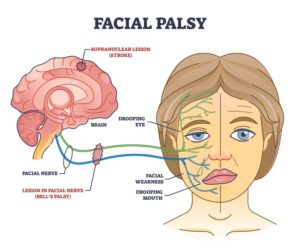
Bell’s palsy is a type of peripheral facial nerve dysfunction that affects an estimated 11–40 people per 100,000 annually worldwide—equating to roughly 70,000 to 250,000 new cases across the globe each year. In India, the incidence is estimated at 15–40 per 100,000 annually, similar to global rates. It can strike individuals of any age, though it’s most commonly diagnosed between ages 15 and 60.
How Bell’s Palsy Occurs
Bell’s palsy develops when the facial nerve becomes inflamed, swollen, or compressed within the narrow bony canal that houses it. Several factors contribute to this nerve dysfunction, with viral infections being the most suspected cause. The Epstein-Barr virus, herpes simplex, cytomegalovirus, and other respiratory viruses may trigger an immune response that leads to nerve inflammation.
Other contributing factors include autoimmune responses, where the body’s immune system mistakenly attacks healthy nerve tissue. Stress, pregnancy, diabetes, and upper respiratory infections can increase susceptibility. The nerve swelling restricts blood flow and normal nerve function, resulting in the characteristic facial weakness that defines the condition.
Symptoms of Bell’s Palsy
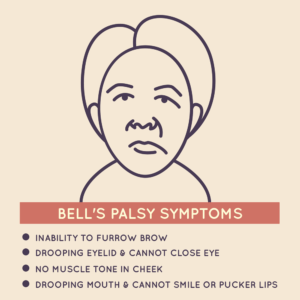
Bell’s palsy symptoms typically appear suddenly, often overnight, and may include drooping of one side of the mouth, inability to close the affected eye completely, loss of facial expressions on the affected side, and difficulty eating or drinking as food may fall from the weakened side of the mouth. Other common signs include altered taste, increased ear sensitivity (hyperacusis), pain around the jaw or behind the ear, headache, excessive tearing or dry eye, and speech articulation issues—symptoms that can greatly affect daily life, social interactions, and emotional well-being.
Bell’s Palsy physiotherapy addresses these challenges by using targeted exercises, manual therapy, and neuromuscular retraining to maintain facial muscle tone, prevent atrophy, and restore functional movement. This active approach helps patients rebuild symmetry and confidence, supporting improved facial control and social engagement during recovery.
Treatment Options for Bell’s Palsy
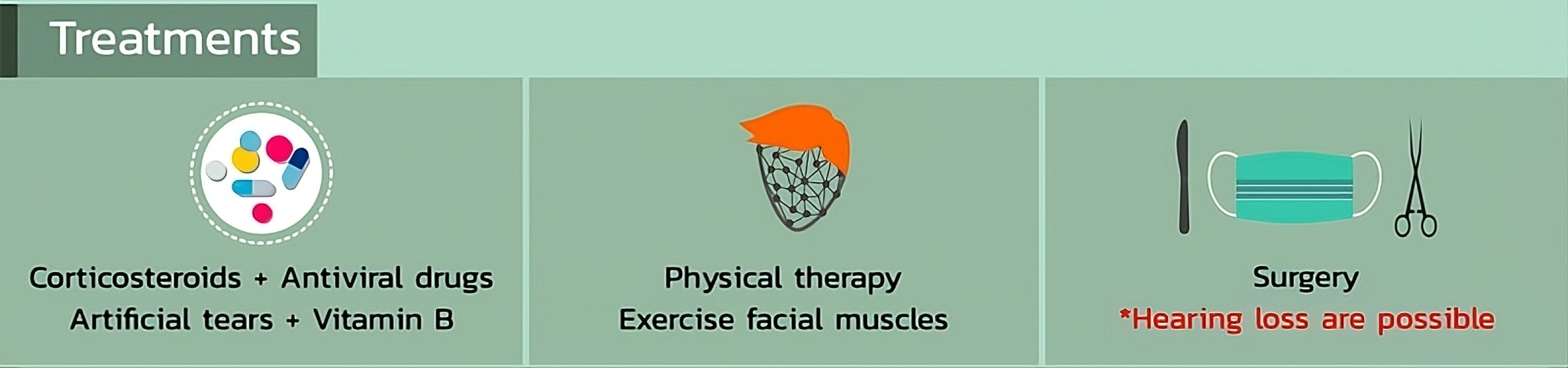
Early medical intervention typically includes corticosteroids to reduce inflammation and swelling around the facial nerve. Anti-viral medications may be prescribed if viral infection is suspected. Eye protection becomes crucial when eyelid closure is compromised, requiring artificial tears, eye patches, or protective eyewear.
Here are 4 key treatment options for Bell’s Palsy physiotherapy:
Facial exercises & neuromuscular re-education – Gentle, repetitive movements such as eyebrow raises, eye closures, and smiling help retrain nerve‑to‑muscle connections and improve symmetry using mirror or EMG biofeedback.
Manual therapy & massage – Soft‑tissue mobilizations promote blood flow, reduce muscle stiffness and swelling, and preserve tissue flexibility around affected facial regions.
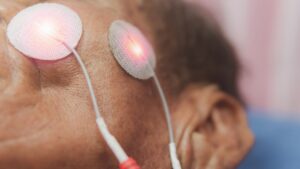
Electrotherapy & modalities – Techniques like low‑level electrical stimulation, TENS, heat, cold packs, or laser therapy can activate muscles, ease pain, and speed recovery .
Supportive care & self-management – Eye protection (artificial tears, patches), relaxation training, and family education enhance treatment, prevent complications, and improve engagement in Bell’s Palsy physiotherapy.
However, medications alone cannot address the functional deficits and muscle weakness that persist during recovery. This is where physiotherapy services become essential for comprehensive rehabilitation and optimal recovery outcomes.
Why Physiotherapy is the Best Solution
Best physiotherapist professionals specializing in neurological rehabilitation provide evidence-based treatments that promote nerve healing while preventing secondary complications. Physiotherapy clinic services offer structured rehabilitation programs that address both immediate symptoms and long-term functional recovery.
Bell’s Palsy physiotherapy employs manual therapy techniques—like soft-tissue massage and mobilization—to enhance blood flow, reduce swelling, and preserve tissue flexibility around affected facial muscles. It also integrates mirror therapy for visual feedback, supporting neuromuscular retraining and making it easier for patients to relearn facial expressions with improved symmetry and coordination.
The program borrows from techniques used in back, cervical, and joint pain physiotherapy—such as nerve-related pain management and stiffness relief—to prevent compensatory stiffness and tension patterns in the facial region. This holistic approach ensures Bell’s Palsy physiotherapy not only maintains muscle tone and prevents atrophy, but also guides patients toward proper movement patterns and supports active engagement in their recovery journey.
Specialized Physiotherapy Techniques
Modern Bell’s palsy rehabilitation employs advanced techniques including facial muscle re-education exercises that retrain proper movement patterns and prevent abnormal facial expressions. Electrical stimulation therapy helps maintain muscle tone and potentially accelerates nerve regeneration when applied by experienced professionals.
Specialized techniques from other areas like sciatica treatment physiotherapy can be adapted for managing nerve-related facial pain, while frozen shoulder physiotherapy methods offer solutions for stiffness and restricted movement in facial muscles—enhancing Bell’s Palsy physiotherapy programs with a holistic, movement-based approach.
Benefits of Home-Based Physiotherapy Services
Home-based Bell’s Palsy physiotherapy ensures privacy, convenience, and personalized care right in the patient’s own environment, reducing embarrassment and boosting adherence to facial exercises. By eliminating the need to travel, it removes transportation barriers and fits around work or family commitments—making it easier for patients to stay consistent. Offering female physiotherapists for home visits adds another layer of comfort for those preferring same-gender care, especially during intimate facial treatments.
This service also invites family members to participate in Bell’s Palsy physiotherapy sessions—learning essential techniques for facial exercises, eye protection, and supportive strategies that significantly enhance recovery outcomes. It’s particularly beneficial for elderly patients with limited mobility or concurrent health conditions, addressing multiple needs simultaneously with top-quality, compassionate care.
Choosing Quality Physiotherapy Care
Choosing an affordable clinic for Bell’s Palsy physiotherapy means finding expertise in neurological rehabilitation—as early, targeted exercises, manual therapy, and neuromuscular retraining have been shown to significantly improve facial symmetry and psychological well-being. Understanding the emotional impact is just as vital as clinical proficiency.
Post-surgery home-based Bell’s Palsy physiotherapy becomes critical for patients needing interventions like facial nerve decompression—helping reduce nerve pain, support early recovery, and maintain facial muscle tone . Additionally, integrating sports injury physiotherapy techniques allows active patients to gradually return to athletics while safely managing Bell’s Palsy recovery.
Expertise in back and cervical pain physiotherapy is also valuable—since many Bell’s palsy patients develop compensatory postures and muscle tension during recovery. Skilled therapists can address these issues, preventing secondary problems and promoting balanced rehabilitation that complements Bell’s Palsy physiotherapy.
Why Choose Joint Efforts for Comprehensive Care
Joint Efforts Physiotherapy excels in delivering evidence-based Bell’s Palsy physiotherapy, combining empathetic, patient-focused care with proven treatment protocols to restore facial function and enhance overall quality of life.
We ensure accessibility through comprehensive home-based Bell’s Palsy physiotherapy across Noida and the NCR, offering affordable clinic rates without compromising quality. Our holistic model integrates facial exercises, emotional support, family education, and personalized care—extending far beyond facial movements to support full recovery and renewed confidence.