


What is Multiple Sclerosis?
Multiple sclerosis (MS) is a chronic autoimmune disease that affects the central nervous system, including the brain, spinal cord, and optic nerves. In MS, the immune system mistakenly attacks myelin, the protective covering around nerve fibers, causing inflammation and scarring. This damage disrupts the normal flow of electrical impulses along nerve fibers, leading to various neurological symptoms.
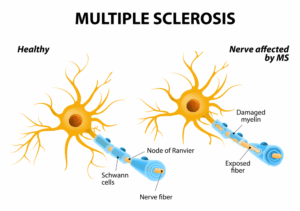
The disease affects approximately 2.8 million people worldwide, with symptoms varying greatly between individuals. Early diagnosis and proper treatment, including specialized physiotherapy services, can help manage symptoms and slow disease progression.
Types of Multiple Sclerosis
Multiple Sclerosis categorises into four primary forms, each with distinct patterns of progression:
Relapsing-Remitting MS (RRMS) Roughly 85% of MS patients begin with RRMS, which involves clear episodes of worsening symptoms followed by recovery periods. Patients typically see some improvement or complete symptom relief between flare-ups. At-home physical therapy helps during both active episodes and quieter intervals.
Secondary Progressive MS (SPMS) typically develops from RRMS, where the disease begins to progress steadily with or without occasional relapses. Patients often require ongoing physiotherapy for elderly at home as mobility challenges increase.
Primary Progressive MS (PPMS) involves gradual worsening of neurological function from onset, without distinct relapses or remissions. This type often requires comprehensive at-home physiotherapy services for optimal management.
Progressive-Relapsing MS (PRMS) is the least common type of multiple sclerosis. It involves a continuous worsening of symptoms from the beginning, along with occasional flare-ups, but without any periods of recovery.
Early Warning Signs of Multiple Sclerosis?
MS symptoms in the early stages can be mild and look like other health problems, which makes it hard for doctors to figure out what’s wrong. The first signs Medical practitioners usually notice are:
Sensory symptoms such as numbness, tingling, or burning sensations in various body parts. Joint pain physiotherapy can help address related musculoskeletal issues.
Vision problems including blurred vision, double vision, or partial vision loss. These symptoms may require coordination with a skilled physiotherapist for balance training.
Fatigue is one of the first signs that shows up most often, hitting about 8 out of 10 people with the condition. Professional in-home physical therapy services can teach you ways to save and manage your energy better.
Weak muscles and stiffness usually start in the legs first, making it harder to walk steady and keep your balance. Physiotherapist can provide targeted exercises to maintain strength and flexibility.
Coordination and balance issues may manifest as difficulty walking, frequent falls, or tremors. Home visit physiotherapy can focus on fall prevention and mobility enhancement.
What Causes Multiple Sclerosis?
The precise cause of multiple sclerosis is still unclear, but studies indicate it likely stems from a mix of genetic predisposition, environmental influences, and immune system dysfunction. Experts believe the condition begins when someone with an inherited vulnerability is exposed to certain environmental factors, prompting an abnormal immune reaction.
Genetic factors play a role, as MS is more common in certain families and ethnic groups. However, MS doesn’t pass directly from parent to child, though family history may raise your chances just a little bit.
Environmental factors include viral infections (particularly Epstein-Barr virus), vitamin D deficiency, smoking, and geographic location. People living farther from the equator have higher MS rates.
Autoimmune dysfunction occurs when the immune system mistakenly attacks healthy myelin tissue, causing inflammation and damage that characterizes MS.
Risk Factors and Complications for Multiple Sclerosis
Several factors increase MS risk, including being female (women are 2-3 times more likely to develop MS), age (most commonly diagnosed between 20-50 years), family history, certain infections, race (higher risk in people of Northern European descent), and autoimmune diseases.
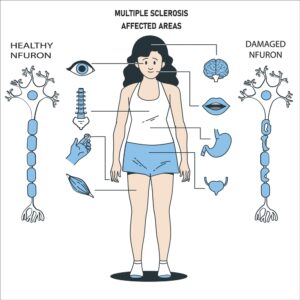
Complications can be severe and progressive. Mobility issues often require specialized knee pain physiotherapy and back pain treatment. Cognitive changes may affect memory and concentration. Emotional changes including depression are common. Speech and swallowing difficulties may develop. Bladder and bowel dysfunction frequently occurs in advanced stages.
Why Physiotherapy is the Best Solution for MS
Physiotherapy stands as the cornerstone of MS management, offering evidence-based interventions that address multiple symptom domains simultaneously. Unlike medications that primarily target inflammation, physiotherapy provides comprehensive solutions for functional improvement and quality of life enhancement.
An affordable physiotherapy clinic can provide specialized MS programs that include strength training, balance exercises, and mobility enhancement. The best physiotherapy for back pain techniques are particularly valuable for MS patients who often develop secondary musculoskeletal issues.
Research consistently demonstrates that structured physiotherapy programs can improve walking speed, balance, strength, and overall functional capacity in MS patients. Physiotherapy services also help prevent secondary complications such as contractures, pressure sores, and cardiovascular deconditioning.
Essential Treatment Approaches for MS
Effective MS physiotherapy incorporates multiple treatment modalities tailored to individual needs and disease progression. Strength training helps combat muscle weakness and fatigue. Activities that help with balance and movement control lower the chance of falling and make you feel more steady on your feet. Cardiovascular conditioning maintains fitness levels and combats fatigue.
Gentle movement and muscle lengthening routines help stop muscles from getting tight and keep joints moving freely. Gait training improves walking patterns and efficiency. Real-life activity practice concentrates on everyday tasks and helping you stay independent. Pain management techniques address both neuropathic and musculoskeletal pain.
Specialized approaches include sports injury physiotherapy techniques adapted for MS, sciatica treatment physiotherapy for nerve-related pain, and frozen shoulder physiotherapy for upper limb complications.
Why Choose Home Physiotherapy for MS?
Home physiotherapy offers unique advantages for MS patients, addressing the specific challenges this condition presents. The familiar environment reduces stress and anxiety, while eliminating transportation barriers that often limit access to care.
Female physiotherapist for home visit services can provide gender-specific care preferences, particularly important for intimate care needs. Physiotherapy for seniors at home addresses the higher prevalence of MS in older adults who may have mobility limitations.

Post-surgery physiotherapy at home is crucial for Multiple Sclerosis patients who undergo procedures like baclofen pump implantation or tendon releases. Home physiotherapy for stroke patients techniques can be adapted for MS patients experiencing similar neurological deficits.
The convenience of physiotherapy home visit services ensures consistent treatment delivery, even during MS relapses when traveling becomes difficult. Home physiotherapy for knee replacement protocols can be modified for MS patients requiring joint replacement surgery due to immobility complications.
Why Choose Joint Efforts for Multiple Sclerosis Care
Joint Efforts sets the benchmark for MS physical therapy services by blending professional knowledge with caring, personalized treatment approaches. Our physical therapy specialists focus on brain and nerve conditions, providing research-backed methods created specifically for managing Multiple Sclerosis symptoms. We offer comprehensive cervical pain physiotherapy for Multiple Sclerosis patients experiencing neck-related symptoms, alongside postnatal physiotherapy at home for women managing both MS and post-pregnancy recovery. Our holistic approach addresses the complex, multifaceted nature of MS through integrated care planning.
Our commitment to accessibility ensures that every patient receives quality care regardless of mobility limitations or disease progression. Select Joint Efforts Physiotherapy in Noida or home visits across Delhi-NCR for specialized MS physical therapy focused on your freedom, convenience, and lasting wellness results.