

Stroke affects millions worldwide, instantly transforming lives. The journey from survivor to recovery champion begins with dedication and expert stroke rehab. As the cornerstone of recovery, stroke rehab through physiotherapy helps restore mobility, independence, and quality of life for patients and their families.
Understanding Different Types of Strokes
Strokes occur when blood flow to the brain is disrupted, causing brain cells to die from lack of oxygen. Understanding the type of stroke helps determine the most effective rehabilitation approach.
Ischemic Stroke represents 87% of all strokes and occurs when blood clots block brain arteries. These can be thrombotic strokes (clots forming directly in brain arteries) or embolic strokes (clots traveling from other body parts, often the heart). Recovery patterns vary depending on the location and size of the blockage.
Hemorrhagic Stroke accounts for 13% of strokes and happens when blood vessels rupture, causing bleeding in or around the brain. This type includes intracerebral hemorrhage (bleeding within brain tissue) and subarachnoid hemorrhage (bleeding around the brain surface). These strokes often require more intensive rehabilitation due to brain tissue damage from bleeding.
Transient Ischemic Attack (TIA) or “mini-stroke” produces temporary symptoms but serves as a critical warning sign. While TIA symptoms resolve quickly, they indicate high risk for future strokes, making immediate rehabilitation and prevention strategies essential.
How Stroke Impacts Movement and Daily Living
The effects of stroke depend on which brain area is damaged and how much tissue is affected. Common challenges include hemiplegia (paralysis on one side), muscle weakness, spasticity, balance problems, coordination difficulties, and sensory changes. These physical impairments significantly impact activities of daily living, from basic tasks like dressing and eating to complex activities like driving and working.

The emotional and psychological impact cannot be overlooked. Many stroke survivors experience depression, anxiety, and frustration as they navigate their new reality. This is where comprehensive physiotherapy becomes invaluable, addressing not just physical limitations but also rebuilding confidence and independence.
The Foundation of Stroke Recovery Through Physiotherapy
Home physiotherapy for stroke patients has transformed recovery outcomes by providing personalized, consistent treatment in comfortable environments. A skilled physiotherapist with neurological expertise creates individualized programs targeting each patient’s specific deficits while promoting overall functional improvement.
Essential Recovery Elements:
- Neuroplasticity Training – Specialized exercises stimulate the brain’s ability to form new neural pathways, helping undamaged areas compensate for injured regions through repetitive, task-specific activities.
- Strength and Mobility Restoration – Progressive resistance training rebuilds muscle strength while range-of-motion exercises prevent contractures and maintain joint flexibility essential for daily activities.
- Balance and Coordination Enhancement – Systematic balance training reduces fall risk while improving postural control, weight shifting, and stability during standing and walking activities.
- Functional Movement Retraining – Real-world task practice focuses on meaningful activities like transfers, reaching, and walking patterns that directly translate to independent living skills.
Early intervention proves crucial for optimal outcomes. Best physiotherapist professionals often begin gentle mobilization within 24-48 hours post-stroke when medically stable, significantly improving long-term recovery potential.
Advanced Rehabilitation Techniques and Technologies
Modern stroke rehab uses advanced techniques to boost brain plasticity and speed up recovery. Constraint-induced movement therapy encourages use of the affected limb by limiting the unaffected side, supporting neural reorganization and motor relearning. Task-specific training in stroke rehab focuses on practicing real-life activities essential for independent living.
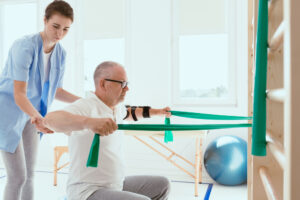
Physiotherapy for elderly at home becomes particularly valuable since many stroke survivors are older adults with multiple health conditions. The comfort of home visit physiotherapy eliminates transportation barriers while providing treatment in familiar surroundings, often resulting in better compliance and faster progress.
Mirror therapy utilizes visual feedback to retrain the brain, with patients observing their unaffected limb moving while attempting to move the affected limb. Electrical stimulation assists muscle re-education and prevents atrophy during recovery phases.
Comprehensive Care Beyond Primary Stroke Symptoms
Stroke recovery goes beyond addressing initial symptoms—it involves managing secondary complications that can affect overall progress. Stroke rehab often includes back pain treatment to relieve musculoskeletal strain caused by compensatory movements and poor posture. Joint pain physiotherapy helps ease stiffness and contractures resulting from limited mobility and muscle weakness.
When altered gait or prolonged sitting compresses nerves, sciatica-focused physiotherapy becomes essential. Frozen shoulder treatment is also common, as reduced arm movement during recovery can lead to shoulder issues.
Sports injury physiotherapy techniques adapt well to stroke rehabilitation, particularly for younger survivors or those with athletic backgrounds. These approaches emphasize functional movement patterns and sport-specific skills that can translate to daily activities.
For younger survivors or those with athletic backgrounds, sports injury physiotherapy techniques are adapted within stroke rehab to promote functional movement and daily activity readiness. Additionally, chest physiotherapy supports respiratory health with breathing exercises and airway clearance to maintain lung function throughout the recovery journey.
Revolutionary Benefits of Home-Based Stroke Rehabilitation
At-home physiotherapy services offer unique advantages that hospital or clinic-based care cannot match. The familiar environment reduces confusion and anxiety, particularly important for stroke survivors with cognitive changes. Female physiotherapist for home visit services provide additional comfort for patients preferring same-gender care, especially during intimate care activities.
Physiotherapist for home visit professionals can assess and modify the actual living environment, identifying safety hazards and recommending adaptive equipment. This real-world approach ensures therapy gains translate directly to daily living situations, maximizing functional independence.
Family involvement becomes natural in home settings, allowing caregivers to learn proper transfer techniques, exercise programs, and safety strategies. This education component proves crucial for maintaining progress between sessions and preventing caregiver injuries.
Managing Pain and Secondary Conditions During Recovery
Many stroke survivors experience various pain conditions that require specialized attention. Knee pain physiotherapy addresses issues from altered walking patterns or prolonged immobility. Physiotherapy for seniors at home incorporates age-appropriate techniques considering multiple health conditions common in elderly patients.
Post-surgery physiotherapy at home becomes relevant for stroke survivors requiring procedures like PEG tube placement or orthopedic surgeries. Specialized rehabilitation optimizes surgical outcomes while ensuring safe recovery in comfortable surroundings.
Postnatal physiotherapy at home may be needed for younger female stroke survivors who experience stroke during or after pregnancy, requiring specialized care addressing both neurological and postpartum recovery needs.
Why Choose Joint Efforts for Stroke Rehabilitation Excellence
Selecting the right physiotherapy clinic for stroke recovery demands expertise in neurological rehabilitation and comprehensive care approaches. Joint Efforts Physiotherapy excels in delivering specialized stroke rehabilitation through evidence-based treatment protocols and patient-centered care philosophy. Their experienced team understands the complex, multifaceted challenges facing stroke survivors and develops personalized treatment plans addressing physical, emotional, and social aspects of recovery.
The clinic’s strong focus on accessibility ensures stroke survivors receive high-quality care through comprehensive home physiotherapy services, overcoming mobility and transportation barriers. Flexible scheduling supports the unique needs of stroke recovery—adapting to fluctuating energy levels, medical visits, and therapy sessions to enhance comfort and outcomes.
Joint Efforts’ collaborative approach to stroke rehab brings together neurologists, occupational and speech therapists, and other experts to deliver holistic care. This integrated model, along with thorough caregiver training and family education, fosters a supportive environment for successful stroke rehab and long-term independence.
Conclusion
The journey from stroke survivor to recovery champion, while challenging, becomes achievable with expert physiotherapy intervention and unwavering support. Joint Efforts Physiotherapy, with over 15 years of specialized experience in neurological rehabilitation, stands as the trusted partner for stroke survivors throughout the NCR region. Based in Noida, their experienced team provides comprehensive affordable physiotherapy clinic services that make quality stroke rehabilitation accessible to families from all backgrounds. Through their dedicated home physiotherapy for stroke patients services covering the entire NCR region, they ensure every stroke survivor receives the specialized, compassionate care needed to reclaim their independence, rebuild their confidence, and rediscover hope for a meaningful future in the comfort and security of their own home environment.